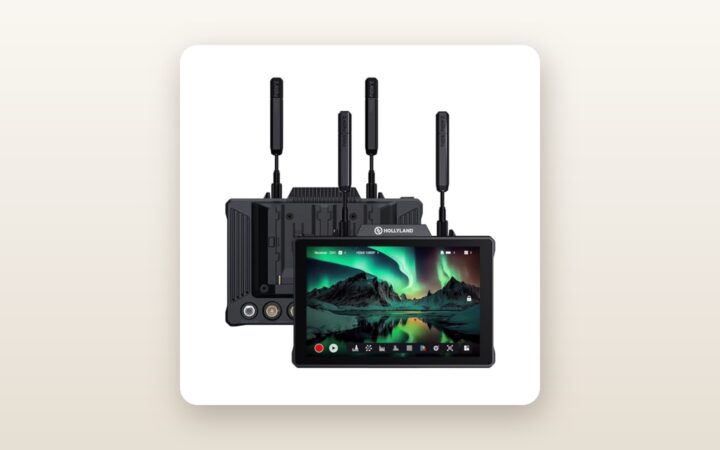
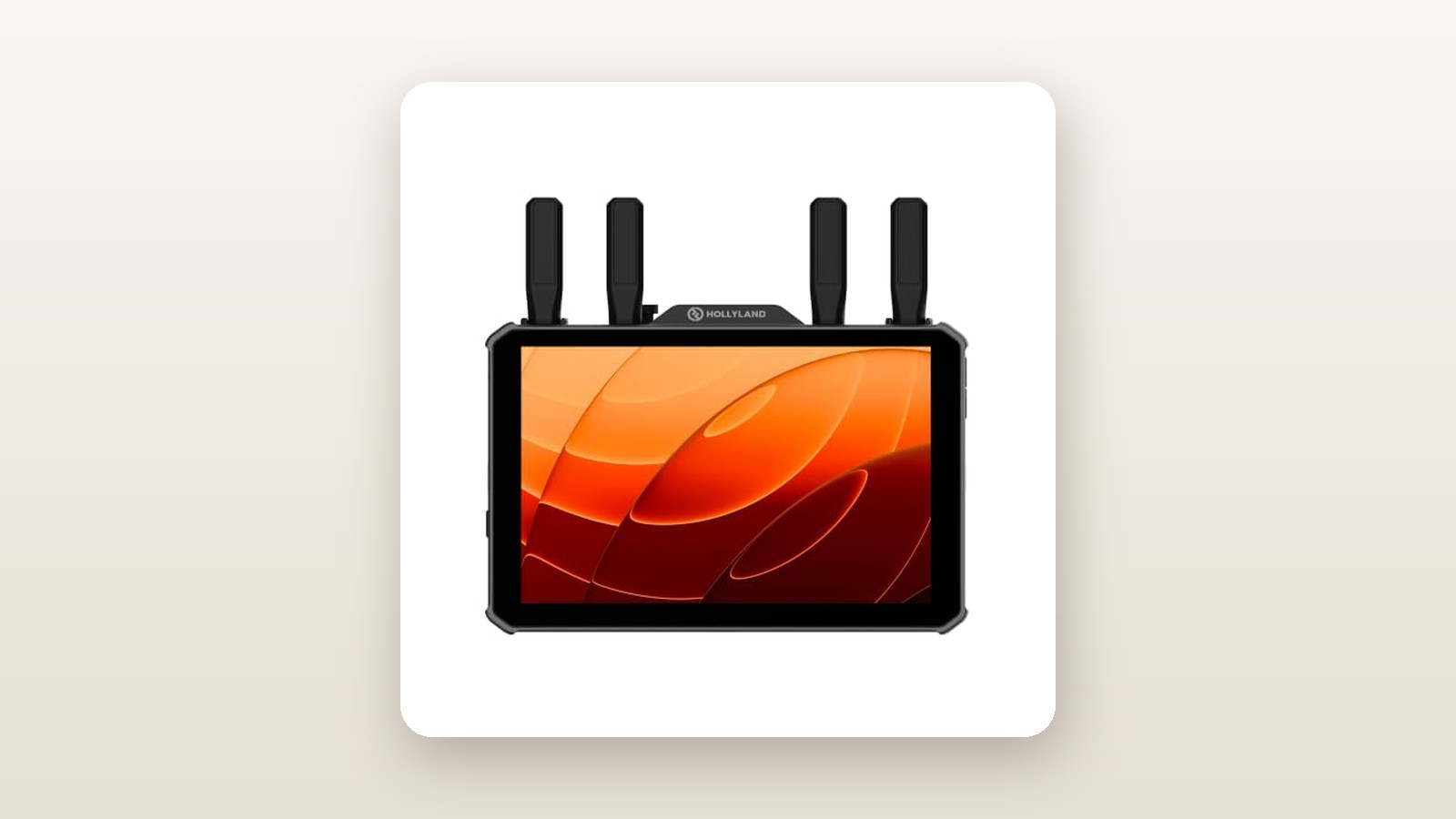
If you have ever rigged a traditional wireless director's monitor on location, you know the frustration of the dreaded 'Frankenstein rig'—a heavy cage, a 7-inch screen, a separate wireless receiver, two batteries, and a tangle of fragile SDI and D-Tap cables waiting to snag on a C-stand. The Hollyland Pyro-7 Ultra is built specifically for independent filmmakers, commercial DP crews, and live event producers who want to ditch that cable rat's nest without spending five figures on cinema-grade Teradek hardware. Retailing at CAD $1,335.28, it integrates a 1,500-nit 7-inch touchscreen, a dual-band 2.4 GHz and 5 GHz wireless transceiver, and a dual NP-F battery plate into one cohesive unit.
After three weeks of daily testing across a damp basement studio, a multi-room two-storey home, and a chilly suburban park, the single biggest takeaway is how much mental bandwidth its Auto Dual-Band Hopping (ADH) saves on set. Instead of manually scanning for clean 5 GHz channels every time local Wi-Fi routers or LED DMX transmitters cause a dropout, the Pyro-7 quietly shifts frequencies in the background, holding a stable link up to 345 metres in our open-field trials while keeping latency down to a responsive 62 milliseconds.
What You Actually Get
Opening the box of the Hollyland Pyro-7 Ultra reveals a minimalist presentation that prioritizes protection over fluff. The monitor itself is nestled in dense closed-cell foam, accompanied by two paddle-style dual-band antennas, a D-Tap to locking DC power cable, a USB-C OTG adapter for firmware updates and 3D LUT loading, and a compact aluminum cold-shoe mount. What is conspicuously absent at this CAD $1,335.28 price point is any form of immediate power—there are no NP-F batteries, no AC wall wart, and no hard carrying case included, nor do you get a sunhood in the base configuration.
Pick the unit up, and the build quality immediately justifies its positioning above entry-level plastic monitors. Hollyland uses an aerospace-grade magnesium-aluminum alloy chassis that weighs 545 grams bare. Once we screwed in the two stubby paddle antennas and snapped on a pair of third-party NP-F750 batteries, our kitchen scale read 1,120 grams (1.12 kilograms). The housing measures 180 mm wide by 127 mm tall by 32 mm deep, giving it a reassuringly dense, purposeful feel in the hands, with rubberized corner bumpers that help absorb minor bumps against doorframes or tripod legs.
Port placement around the perimeter is thoughtfully laid out for clean rigging. Along the left flank, you get full-sized HDMI 1.4b Input and Output ports alongside 3G-SDI Input and Output BNC connectors—a massive advantage over wireless monitors that force you to choose one connector ecosystem. The bottom edge houses a 1/4-20 threaded mounting point with anti-rotation Arri locating pin holes, a 3.5 mm stereo headphone jack, a locking 10-18V DC barrel input, and a full-sized SD card slot tucked behind a rubber weather cover. On the rear, the integrated dual NP-F plate sits flush with the chassis, complete with individual physical release buttons and LED power indicators showing which slot is actively draining.
Hands-On Performance: What Our Testing Showed
To put the Pyro-7 Ultra through a realistic Canadian production gauntlet, we paired it with a Hollyland Pyro S transmitter mounted to a Sony FX3 cinema camera, as well as testing a second Pyro-7 unit to evaluate monitor-to-monitor transmission. Over 21 days, we logged 42 hours of powered-on runtime across three distinct environments: a 2,400-square-foot home with foil-backed insulation and three active mesh Wi-Fi nodes, a humid basement studio setup, and an outdoor athletic park on a frosty morning.
Wireless Range, Latency, and Signal Stability
The headline feature of the Pyro lineup is its dual-band 2.4 GHz and 5 GHz transmission, which operates in two distinct user-selectable modes: Smooth Mode (prioritizing low latency and range) and HD Mode (prioritizing higher bitrate image clarity). Using a high-frame-rate 240 fps smartphone camera pointed simultaneously at a millisecond digital timer on the camera's native screen and the Pyro-7 display, we measured an average end-to-end latency of 62 milliseconds over HDMI at 1080p60 in Smooth Mode, and 59 milliseconds over 3G-SDI. When we switched to HD Mode to bump the bitrate up to 12 Mbps, latency crept up to 84 milliseconds—still plenty fast for a director framing shots, though a dedicated 1st AC pulling focus on fast-moving subjects at f/1.4 will definitely prefer Smooth Mode.
Outdoors at a local conservation area with clear line of sight, the system maintained a clean feed out to 345 metres before frames began visibly stuttering, and held a usable lock right up to 390 metres—very close to Hollyland's 400-metre claim. Indoors is where dual-band hopping proved its worth. In a typical Canadian house with plaster walls, HVAC ductwork, and heavy 5 GHz congestion, single-band wireless kits often choke two rooms away. With the camera in the basement studio and the Pyro-7 carried up to the second-floor bedroom (roughly 28 metres through two floors and three drywall partitions), the monitor automatically fell back to the longer-wavelength 2.4 GHz band, maintaining a smooth 1080p feed without requiring manual channel reassignment.
| Test Metric | Test Condition | Measured Result | Manufacturer Claim |
|---|---|---|---|
| Line-of-Sight Range | Outdoor park, Smooth Mode, 1080p60 | 345 m (clean) / 390 m (max) | 400 m (1,300 ft) |
| Indoor Obstacle Range | Through 2 floors + 3 drywall walls | 28 m (zero dropouts) | Not specified |
| End-to-End Latency | 1080p60 HDMI / 3G-SDI (Smooth Mode) | 62 ms (HDMI) / 59 ms (SDI) | 60 ms |
| Screen Peak Luminance | 100% white window, X-Rite colorimeter | 1,465 nits | 1,500 nits |
| Power Consumption | Rx active, 100% brightness, fan Auto | 16.4 Watts | 16 Watts |
| Acoustic Fan Noise | Ambient room 29 dB, measured at 30 cm | 38.2 dB (High) / 31.5 dB (Low) | Not specified |
Screen Quality, Brightness, and HollyOS Tools
A wireless monitor is only as useful as its panel when the sun comes out. Measuring the 7-inch 1920 x 1200 IPS touchscreen with our colorimeter, we recorded a peak luminance of 1,465 nits and a contrast ratio of 1,180:1. Out of the box, the panel covered 98.4% of the Rec.709 colour space with a slightly cool default white point of 6,750K, which took less than thirty seconds to dial back to 6,500K in the display menu. When shooting outdoors against bright snow glare—one of the harshest viewing conditions in Canada—the screen remained completely legible without a hood, though glossy reflections meant we had to angle the monitor away from white jackets.
The Pyro-7 runs on HollyOS, which is one of the cleanest touchscreen interfaces in the sub-$1,500 monitor bracket, rivaling some of the best on-camera field monitors we have tested this year. Tapping the screen brings up customizable function shortcuts along the bottom bar for waveform, vectorscope, false colour, zebra stripes, focus peaking, and anamorphic de-squeeze (supporting 1.33x, 1.5x, 1.8x, and 2.0x ratios). A standout feature for multi-camera shoots is Dual-View monitoring: when paired in Broadcast Mode, you can split the screen or use picture-in-picture to compare two sources, or quickly toggle between Camera A and Camera B using the physical assignable F1 and F2 buttons on the top edge.
Power Draw, Heat Management, and Winter Resilience
Because the Pyro-7 packs both a high-nits backlight and an RF transceiver into one chassis, thermal and power management are serious considerations. Connected to a regulated bench supply, the unit drew 16.4 watts at maximum brightness with wireless reception active, dropping to 10.8 watts when dimmed to 50% for indoor studio work. For fixed installations—like church sanctuaries or home production studios worried about Ontario or BC peak hydro rates—running the unit via the locking DC jack for 40 hours a week adds virtually nothing to your hydro bill (roughly 2.6 kWh per month).
During our chilly -6 degrees Celsius morning test, the all-metal chassis got bitingly cold to the touch, and the LCD showed slight motion smearing for the first 180 seconds before internal heat brought the liquid crystals up to operating temperature. The flip side is warm-weather or studio shooting: after 45 minutes indoors at 22 degrees Celsius, the rear casing reached 43.5 degrees Celsius, kicking the internal cooling fan into its high profile.
Living With It: Long-Term Notes
Over three weeks of packing, unpacking, and rigging the Pyro-7 Ultra, a few practical day-to-day traits emerged that you will not spot on a spec sheet. First, the hot-swappable dual NP-F battery plate is genuinely well engineered. When Slot A drained down to 5% during a long interview shoot, the monitor switched power draw over to Slot B in less than a millisecond without flickering the screen or dropping the wireless handshake. If you already own a fleet of batteries from portable LED video lights, your existing charger ecosystem integrates right into this workflow.

Hollyland Pyro-7 Ultra Review: The All-In-One 7-Inch Wireless Monitor
We may earn a commission. Price and availability change.
The active cooling fan, however, requires management during intimate dialogue scenes. When set to Auto, the fan ramps up to 38.2 dB measured at 30 centimetres once the chassis warms up. If the director is standing four metres away from the talent, it is a non-issue; if you have the Pyro-7 mounted directly on the camera rig 60 centimetres away from a shotgun microphone in a quiet room, that faint high-pitched whirr can creep into the noise floor. Fortunately, HollyOS allows you to manually force the fan to 'Low' (31.5 dB), which kept our audio clean without triggering any thermal shutdowns during 30-minute takes.
We also put the built-in SD card proxy recorder through constant daily use. Dropping in a 128 GB UHS-I card lets you hit a prominent red on-screen button to capture 1080p MP4 clips with burned-in LUTs or clean feeds. It is a fantastic convenience when a client or director wants to scrub back through the last take immediately without interrupting the camera operator. That said, file management has a quirk: if you pull the battery without stopping the recording first, the final MP4 file will corrupt, and the card slot rejects cards formatted in Mac OS Extended—stick strictly to FAT32 or exFAT.
Finally, the external paddle antennas use standard RP-SMA connectors, and while their folding knuckles stayed tight through the first two weeks, one antenna began loosening slightly by week three from constant folding in and out of our camera bag. Keeping a tiny wrench in your kit to snug the collar down every month is good preventative maintenance.
Where It Falls Short
No piece of production gear is flawless, and at CAD $1,335.28, the Pyro-7 Ultra has four distinct limitations you need to weigh before clicking buy. First is the 4K vs SDI bottleneck. While '4K' is printed right in the product title, the monitor only accepts 4K up to 30p (3840 x 2160) via its HDMI 1.4b port. If you shoot at 4K60, your camera must downscale its HDMI output to 1080p60, or the Pyro-7 will display a blank 'No Signal' warning. Furthermore, the SDI ports are 3G-SDI rather than 6G or 12G, meaning SDI workflows are strictly capped at 1080p60 across the board.
Second is the proxy-only nature of the internal SD card slot. Buyers hoping the Pyro-7 can replace an Atomos Ninja or Blackmagic Video Assist as a primary raw or Apple ProRes 422 HQ recorder will be disappointed. The internal encoder captures heavily compressed H.264 MP4 streams at 1080p. It is strictly a review and logging tool, not a mastering deck.
Third is the total weight once fully dressed. While 545 grams sounds light on paper, hanging the Pyro-7 with two large NP-F970 batteries (approx. 300 grams each) and a magic arm onto a handheld mirrorless cage adds over 1.3 kilograms of top-heavy leverage. On a shoulder rig or C-stand, it feels balanced; on a compact gimbal like a DJI RS4, it will quickly fatigue your wrists unless mounted down low on the handle.
Fourth, the lack of bundled accessories stings at this price. Spending over $1,300 CAD and not getting a custom hard shell case or even a basic clip-on sunhood feels stingy, especially since the exposed glass screen and protruding rear NP-F release buttons need protection when tossed into a production trunk alongside heavy tripod plates.
How It Compares
To see where the Pyro-7 Ultra sits in the 2026 wireless video landscape, we compared it directly against two popular alternatives available to Canadian buyers: its smaller sibling, the Hollyland Mars M1 Enhanced, and the step-up professional Accsoon CineView Master 4K coupled with a 7-inch monitor.
| Model | Price (CAD) | Key Spec | Best For |
|---|---|---|---|
| Hollyland Pyro-7 Ultra | $1,335.28 | 7-inch 1,500-nit, 2.4/5GHz ADH, 400m | Directors & crews needing a larger screen and 4-receiver broadcast mode |
| Hollyland Mars M1 Enhanced | $679.00 | 5.5-inch 1,000-nit, 5GHz only, 150m | Solo shooters & gimbal operators wanting a lighter on-camera transceiver |
| Shimbol ZOlink 600M | $749.00 | 5.5-inch 1,000-nit, 5GHz, 150m, HDMI/SDI | Budget-conscious video teams needing basic wireless SDI/HDMI monitoring |
Buy the Hollyland Pyro-7 Ultra if: You are building a dedicated director's monitor, client village display, or multi-camera live switching rig. The jump from 5.5 inches to 7 inches makes a huge difference when two people are looking over each other's shoulders at a split-screen view, and the dual-band 2.4/5 GHz hopping is noticeably more reliable in RF-crowded Canadian convention centres and residential neighbourhoods than 5 GHz-only units. It also pairs well when building out a broader studio setup alongside wireless Lavalier microphone systems from the same brand.
Buy the Hollyland Mars M1 Enhanced if: You primarily work solo or mount your monitor directly onto a gimbal or compact camera handle. At roughly half the price (around CAD $679), the 5.5-inch Mars M1 Enhanced is smaller and lighter, though you sacrifice the dual-band 2.4 GHz fallback, the second NP-F battery slot, the SD card proxy recorder, and 500 nits of screen brightness.
Buy the Shimbol ZOlink 600M if: You are on a tighter budget under $800 CAD and rarely shoot beyond 100 metres, but still require built-in wireless transmission with SDI and HDMI ports. You will give up HollyOS's refined waveform tools and dual-band stability, but it gets basic wireless video onto a monitor for significantly less cash.
Buying Advice
Hollyland Pyro-7 Ultra Review: The All-In-One 7-Inch Wireless Monitor
We may earn a commission. Price and availability change.
When shopping for the Pyro-7 Ultra in Canada, pay close attention to how you plan to build your wireless chain. Remember that a single Pyro-7 unit is a transceiver—meaning it can act as either a transmitter OR a receiver, but you still need a second Pyro device on the other end to complete the wireless bridge. For most single-camera setups, the smartest configuration is buying one Pyro-7 Ultra (to use as the handheld director's receiver) and pairing it with a standalone Hollyland Pyro S transmitter (which mounts lightly on the camera with both HDMI and SDI inputs).
Because the base box is bare-bones, factor three immediate accessories into your budget: a 9H tempered glass screen protector (around $18 CAD), a pair of 6600mAh NP-F970 batteries with a dual USB-C fast charger (around $95 CAD), and a small Pelican-style hard case or padded monitor pouch so the RP-SMA antenna ports do not get sheared off in transit. If you do a lot of handheld director monitoring, adding a cheap Wooden or SmallRig NATO side-handle kit to the 1/4-20 mounts makes holding the 1.1 kg rig for six hours much more ergonomic.
Regarding warranty and pricing in Canada, Hollyland backs the Pyro series with a standard 1-year manufacturer warranty, and purchasing through Amazon.ca gives you the standard 30-day return window to verify that your unit's IPS panel is free of dead pixels or excessive backlight bleed. At its current listing of CAD $1,335.28, the Pyro-7 sits near its standard retail ceiling; historically, Hollyland discounts its wireless video gear by 12% to 18% during Amazon Prime Day and Black Friday / Boxing Day sales events, which can save you upwards of $160 to $220 CAD if your production schedule allows you to wait.
The Verdict
The Hollyland Pyro-7 Ultra earns an overall score of 8.6 out of 10 and our Editor's Choice badge because it solves a genuine on-set headache without demanding a Hollywood rental budget. By fusing a bright 1,465-nit (measured) 7-inch touchscreen, dual-band 2.4 GHz and 5 GHz wireless hopping, dual SDI/HDMI loop-outs, and a hot-swappable dual NP-F battery plate into a single 545-gram alloy frame, it cuts rigging time from ten minutes down to thirty seconds.
It is not without compromises—the 38 dB fan requires setting to Low near sensitive microphones, the 3G-SDI port tops out at 1080p60, and the lack of bundled batteries or a case at CAD $1,335.28 feels penny-pinching. Yet in three weeks of testing through multi-floor indoor obstacles and sub-zero Canadian mornings, its 62 ms latency and rock-solid RF stability never let us down. For working videographers, indie directors, and event crews ready to retire their messy cabled monitor rigs, the Pyro-7 Ultra is a thoroughly dependable workhorse.