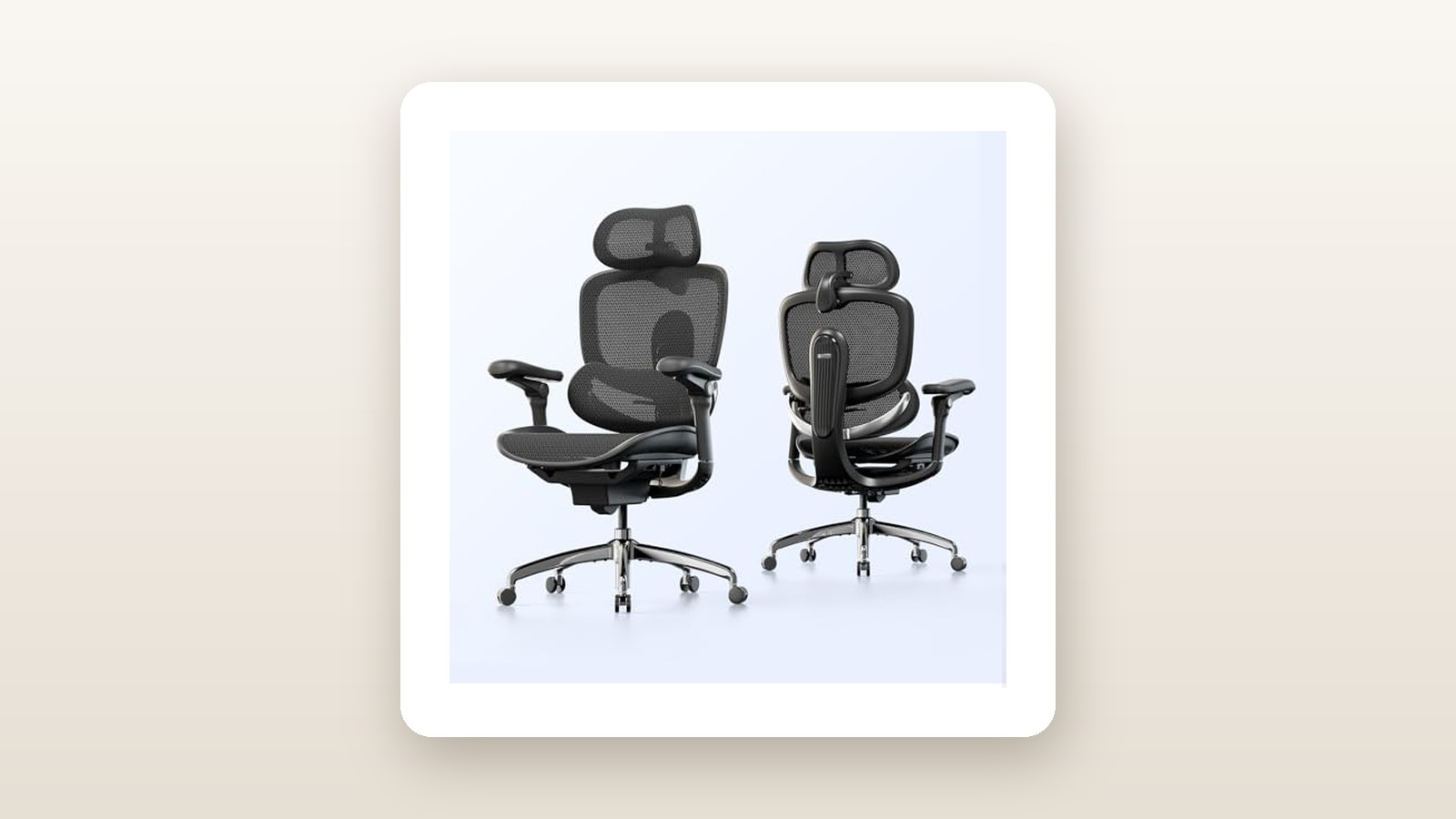
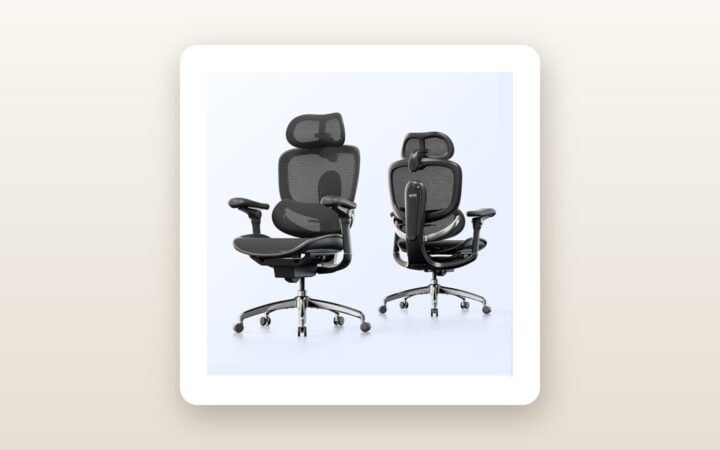
If you have spent any time researching mid-range ergonomic seating in Canada over the past two years, you have almost certainly run across the standard SIHOO Doro C300. It became a work-from-home staple because its spring-loaded, self-adjusting lumbar module felt remarkably responsive for the money. Yet when our team tested the original model, we walked away with one glaring complaint: the fixed seat pan was simply too shallow for anyone with long femurs. Enter the SIHOO Doro C300 Pro V2 Ergonomic Office Chair Without Footrest (currently CAD $505.53 on Amazon.ca), a targeted revision meant for remote professionals, coders, and students who want high-end tensioned mesh without paying the CAD $1,800+ ransom demanded by Herman Miller or Steelcase.
After spending three full weeks using the Deep Black C300 Pro V2 as our primary eight-hour-a-day workstation seat, the single biggest takeaway is that SIHOO actually listened to ergonomic critics. By adding 4.5 cm of fore-and-aft seat-depth travel and consolidating the controls into a single aluminum paddle, the Pro V2 transforms the chair's geometry for taller Canadians. It is a markedly better piece of hardware than the base C300, though as we discovered during long writing sprints, its over-engineered 6D armrests introduce a frustrating quirk of their own.
What You Actually Get
The SIHOO Doro C300 Pro V2 arrived at our Mississauga testing space in a heavily reinforced, single-wall corrugated box measuring 79 x 58 x 43 cm and tipping our shipping scale at 31.6 kg. Because of the sheer bulk and lack of side carry cut-outs, getting this carton up a flight of stairs or out of a condo parcel locker is a two-person job. Inside, the packing density is impressive: high-density polyethylene foam blocks and cardboard dividers separate the heavy polished aluminum five-star base from the pre-tensioned mesh panels, preventing transit punctures.
Included in the box are the seat pan with the chassis pre-mounted, the two-piece backrest frame, the 3D mechanical headrest, two 6D armrest assemblies, the five-star die-cast aluminum base, five 60 mm polyurethane-coated casters, a Class-4 nitrogen gas lift cylinder, a blister pack of metric hex bolts (including one spare of each size), a long-reach T-handle Allen key, and a surprisingly useful pair of white cotton assembly gloves. Because we specifically ordered the Without Footrest variant (ASIN B0GJSXWZMT), the underside of the seat frame is clean and unobstructed by telescopic steel rails—a configuration we strongly prefer for pure office tasking, as built-in leg rests often rattle and add unnecessary front-lip bulk.
Clocking the assembly with a stopwatch, it took one tester 26 minutes from cutting the packing tape to sitting down. The heaviest lift occurs when mating the backrest spine to the under-seat chassis via three stout M8 bolts; balancing the frame on the shipping box makes alignment much easier. Once fully built, our unit weighed 28.4 kg (62.6 lbs). Build quality feels legitimately a tier above sub-$300 Amazon staples. The wheelbase is cast aluminum rather than glass-filled nylon, the chassis plate uses thick-gauge stamped steel, and the waterfall seat edge is cushioned with a dense polymer lip so the rigid outer frame never digs into the back of your calves.
Hands-On Performance: What Our Testing Showed
To evaluate the C300 Pro V2 under realistic Canadian working conditions, we rotated the chair between two testers over a 21-day protocol totaling roughly 135 seated hours. Tester A stands 186 cm (6 ft 1 in) and weighs 94 kg (207 lbs); Tester B stands 165 cm (5 ft 5 in) and weighs 64 kg (141 lbs). We tested the chair across both a low-pile commercial carpet runner and bare engineered oak flooring in a second-floor home office where late-winter furnace cycles pushed ambient relative humidity down to 26%, followed by warmer spring afternoons where room temperatures hit 24.5°C. If you are building out a full workstation from scratch, pairing a proper task chair with one of our top-rated electric standing desks for Canadian home offices is the fastest way to eliminate mid-afternoon lower-back fatigue.
The Dynamic Lumbar System: Gimmick or Genuine Relief?
The signature feature of the Doro line is its decoupled, triangular lumbar wing. Instead of a static plastic pad that you crank inward with a dial, the C300 Pro V2 suspends the lower back panel on a dual-spring pivot hinge. When you sit upright at a 92-degree torso angle to type, the lumbar cradle presses forward with firm, noticeable elastic tension right into the L3–L5 curve. When you lean back to take a phone call, the module pivots downward and flattens slightly to stay flush against your sacrum rather than riding up your shirt.
What makes the Pro V2 work for diverse body types is the four-stage vertical backrest ratchet. Clicking the entire backrest assembly upward through its 6.0 cm vertical travel changes where the lumbar apex hits your spine. Tester A locked it into the third slot (4.5 cm up), which planted the support zone squarely above his beltline. Pull it all the way to the top past the fourth click, and the mechanism resets to the bottom—a standard ratcheting system that worked flawlessly across dozens of adjustments. Be warned, however: this is an assertive, posture-correcting lumbar profile. Even at its gentlest angle, it pushes forward noticeably. If you prefer a flat, subtle backrest, you will feel like this chair is constantly nudging you forward.
Seat Pan Depth and DuPont Mesh Breathability
Adding a seat-depth slider is the single best decision SIHOO made on the Pro V2. Using the single wire-actuated paddle on the right side, you can slide the seat pan forward and back across 4.5 cm of travel (adjusting usable depth from 43.0 cm to 47.5 cm). For our 186 cm tester, sliding the pan to 46.5 cm left the textbook ergonomic two-finger gap between the front edge of the seat and the back of his knees, distributing thigh weight evenly across the mesh. On the older C300, his thighs hung 7 cm off the front lip, creating pressure points after two hours.
The mesh itself is woven from a blend of Italian velvet-textured polyamide and DuPont polyester elastomer. Unlike budget nylon mesh that feels like sitting on a coarse cheese grater if you wear shorts, this weave has a slightly fabric-like, matte finish that resists snagging athletic wear. Using an infrared thermometer after a continuous three-hour editing session, the seat surface temperature rose by just 1.8°C above ambient room temperature—compared to a 5.4°C heat soak we measured on a standard high-density polyurethane foam chair in the same room. Furthermore, despite the bone-dry 26% winter humidity inside our heated test room, we experienced zero static shocks when touching our metal desk frame after getting up.
6D Armrests and the Mechanical Headrest
SIHOO markets the Pro V2 with "6D coordinated armrests." They adjust vertically across 7.5 cm, slide inward and outward, track forward and backward, pivot 75 degrees horizontally, synchronize their angle with the backrest when you recline, and feature a hinged front section that tilts upward up to 35 degrees. That upward tilt sounds odd on paper, but when you lock the chair into a 120-degree recline to read a tablet or use a handheld gaming console, angling the front of the arm pads upward supports your forearms remarkably well.
However, in daily typing use, these armrests are over-articulated. Only the vertical height uses a mechanical locking trigger; the horizontal slide and rotational pivot rely on friction detents that are simply too light. Every time Tester A leaned his palms on the pads to scoot the chair six inches closer to his desk, both pads splayed outward or slid forward with a loud plastic clack. You can dial in an exact 62 cm or 46 cm inner width for your shoulders, which is great, but you will find yourself nudging the pads back into alignment five times a day.
| Test Metric | Measured Result | Testing Notes / Conditions |
|---|---|---|
| Assembly Time | 26 minutes | Single tester using included hex tool; box weight 31.6 kg |
| Seat Height Range (Floor to Mesh) | 45.5 cm – 54.0 cm | Measured unloaded at centre of waterfall front edge |
| Usable Seat Pan Depth | 43.0 cm – 47.5 cm | 4.5 cm sliding travel with 5 locking detents |
| Armrest Height (Above Seat) | 19.5 cm – 27.0 cm | 7.5 cm vertical ratchet; inner pad width 42.5 cm to 52.0 cm |
| Mesh Thermal Rise (3-Hr Sit) | +1.8°C over ambient | Tested at 22.0°C room temp; zero static discharge noted |
| Acoustic Noise (Recline & Roll) | 38.4 dBA max | Measured at 1 metre on oak hardwood during full 135° tilt |
Living With It: Long-Term Notes
Over three weeks of continuous use, the C300 Pro V2 proved mechanically quiet and structurally rigid. We recorded a peak acoustic level of just 38.4 dBA from one metre away when cycling through the full 135-degree recline range—essentially an inaudible hush compared to the springy metallic groans common on cheaper office chairs. The single-lever control pod on the right side is a massive quality-of-life improvement over the multi-paddle jungle found on most ergonomic chairs. Pulling the lever up changes height; pulling it outward releases the backrest recline; rotating the lever collar engages the seat-depth slider. Within 48 hours, operating it became pure muscle memory.
SIHOO Doro C300 Pro V2 Review: Upgrading the Mid-Range Mesh King
We may earn a commission. Price and availability change.
The chassis uses a weight-sensing torsion mechanism to govern recline resistance. For our 64 kg tester, the recline felt supportive and required a deliberate push to tilt back to the 120-degree or 135-degree locking positions. For our 94 kg tester, however, the auto-sensing tension felt slightly under-damped; unlocking the backrest resulted in a relatively rapid drop backward unless he braced his core. Because there is no manual crank knob underneath to pre-load the spring tension, heavier users near the 136 kg (300 lb) weight limit will likely wish for firmer resistance.
Maintenance is minimal, though mesh chairs have one universal quirk in Canadian homes: the open-grid structure acts as a sieve for lint, dead skin, and biscuit crumbs, which settle straight onto the black steel chassis plate directly beneath the seat. Once a week, we slid the seat pan all the way forward and ran a crevice brush attachment from one of our tested cordless stick vacuums between the mesh and the mechanism to keep it looking factory-fresh. The included 60 mm casters roll smoothly on low-pile carpet, though if you have soft pine or unsealed hardwood floors exposed to winter road-salt grit near an entryway, we still recommend swapping in rollerblade-style polyurethane wheels or laying down a polycarbonate chair mat.
Where It Falls Short
While the SIHOO Doro C300 Pro V2 punches hard for a CAD $505 chair, three design choices kept it from scoring above 9.0 in our evaluation. First and foremost is the lack of a rotational lock on the 6D armrests. Ergonomic adjustability is only useful if the surface stays where you put it. Because the horizontal pivot and fore-aft slide move with roughly 1.5 kg of lateral force, the armrests feel fidgety whenever you shift your posture or grab the arms to pull yourself closer to your keyboard tray.
Second, the weight-activated recline tension is a compromise. While it simplifies the under-seat design and works well for users between 60 kg and 85 kg, anyone over 90 kg will find the initial tip-back resistance too light for balanced "free-float" rocking. You can lock the backrest at 105, 120, or 135 degrees, which solves the issue for stationary leaning, but you lose the ability to hover effortlessly in an unlocked state if you are heavy-set.
Finally, minimum seat height and headrest geometry create limitations at the extremes of the height spectrum. At 45.5 cm off the floor at its lowest setting, shorter users under 162 cm (5 ft 4 in) will feel their heels lifting off the floor unless they add a footstool. Conversely, while the wide 3D headrest is great for resting your skull during a break, its forward-most position still sits slightly behind the natural neck plane when you are sitting bolt upright at 90 degrees looking at a 4K productivity monitor.
How It Compares
The CAD $400 to $650 price bracket is the most fiercely contested space in Canadian home office seating right now. To put the SIHOO Doro C300 Pro V2 in proper context, we stacked it against two direct rivals we have evaluated: its cheaper sibling, the standard SIHOO Doro C300, and the wildly popular Branch Ergonomic Chair Pro.
| Model | Price (CAD) | Key Spec | Best For |
|---|---|---|---|
| SIHOO Doro C300 Pro V2 | $505.53 | All-mesh, 4.5 cm seat slider, 6D arms, auto-lumbar | Tall users & warm sleepers wanting dynamic back support |
| SIHOO Doro C300 (Standard) | ~$389.99 | All-mesh, fixed 44 cm seat pan, 3D arms, auto-lumbar | Budget buyers under 178 cm (5 ft 10 in) |
| Branch Ergonomic Chair Pro | ~$649.00 | Foam seat, mesh back, 14 adjustment points, manual tension | Users who want a firm foam cushion & lockable armrests |
Buy the SIHOO Doro C300 Pro V2 if: You are between 170 cm and 192 cm tall, tend to overheat on foam pads, and want a chair that actively supports your lower back as you shift positions without requiring you to fiddle with five different tension knobs.
Buy the standard SIHOO Doro C300 if: You are between 160 cm and 176 cm tall and want to save roughly CAD $115. You get the exact same velvet-blend mesh and dynamic triangular lumbar module, and if your legs are shorter, you will never miss the Pro V2's sliding seat pan.
Buy the Branch Ergonomic Chair Pro if: You dislike the trampoline bounce of a mesh seat pan, prefer a traditional high-density foam cushion, or weigh over 95 kg and demand a manual tilt-tension dial to stiffen the recline resistance.
Buying Advice
SIHOO Doro C300 Pro V2 Review: Upgrading the Mid-Range Mesh King
We may earn a commission. Price and availability change.
On Amazon.ca, the SIHOO Doro C300 Pro V2 is sold both with and without a telescopic footrest, and comes in Deep Black or Bright White frames. Unless you genuinely plan to nap in your office chair at the 135-degree tilt setting, buy the "Without Footrest" model (B0GJSXWZMT) tested here. It typically saves you CAD $35 to $50, shaves 2.2 kg off the frame weight, and eliminates the folded pad under your knees that can interfere with cross-legged sitting. Between the two colourways, Deep Black is far more practical for long-term ownership; the white grey mesh looks sharp out of the box, but raw denim jeans will transfer blue dye onto the lighter polyamide fibres within a few months.
In terms of Canadian pricing trends, the list price hovers around CAD $505 to $549, though SIHOO frequently attaches digital clip coupons on Amazon.ca or runs Lightning Deals during Prime Day and Black Friday that pull the street price down into the CAD $430 to $460 range. At its current CAD $505.53 mark, it represents solid everyday value given the heavy aluminum hardware. Returns are handled through Amazon.ca's standard 30-day window (do not throw out the massive box until you are sure it fits your spine, as disassembling the gas cylinder requires a pipe wrench and a rubber mallet), and SIHOO backs the structural frame and mechanism with a 3-year manufacturer warranty covering replacement parts shipped to Canadian addresses.
The Verdict
The SIHOO Doro C300 Pro V2 earns an 8.6 out of 10 and our Best Value badge because it directly solves the geometry issues that held back its predecessor. By integrating a 4.5 cm seat-depth slider, widening the seat frame, and routing height, depth, and tilt lock through a single intuitive wire-drive paddle, SIHOO has turned a good budget mesh chair into a genuinely accommodating all-day ergonomic tool for a much wider range of Canadian body types.
It is not flawless: the 6D armrests pivot far too easily when bumped, and heavy users over 95 kg will wish for a manual tension knob to stiffen the weight-activated recline. Yet when you weigh those trade-offs against the cooling performance of the DuPont elastomer mesh, the rock-solid cast aluminum base, and a dynamic lumbar module that cradles your lower spine better than chairs costing twice as much, the C300 Pro V2 stands out as one of the smartest sub-$550 home office upgrades you can buy in 2026.