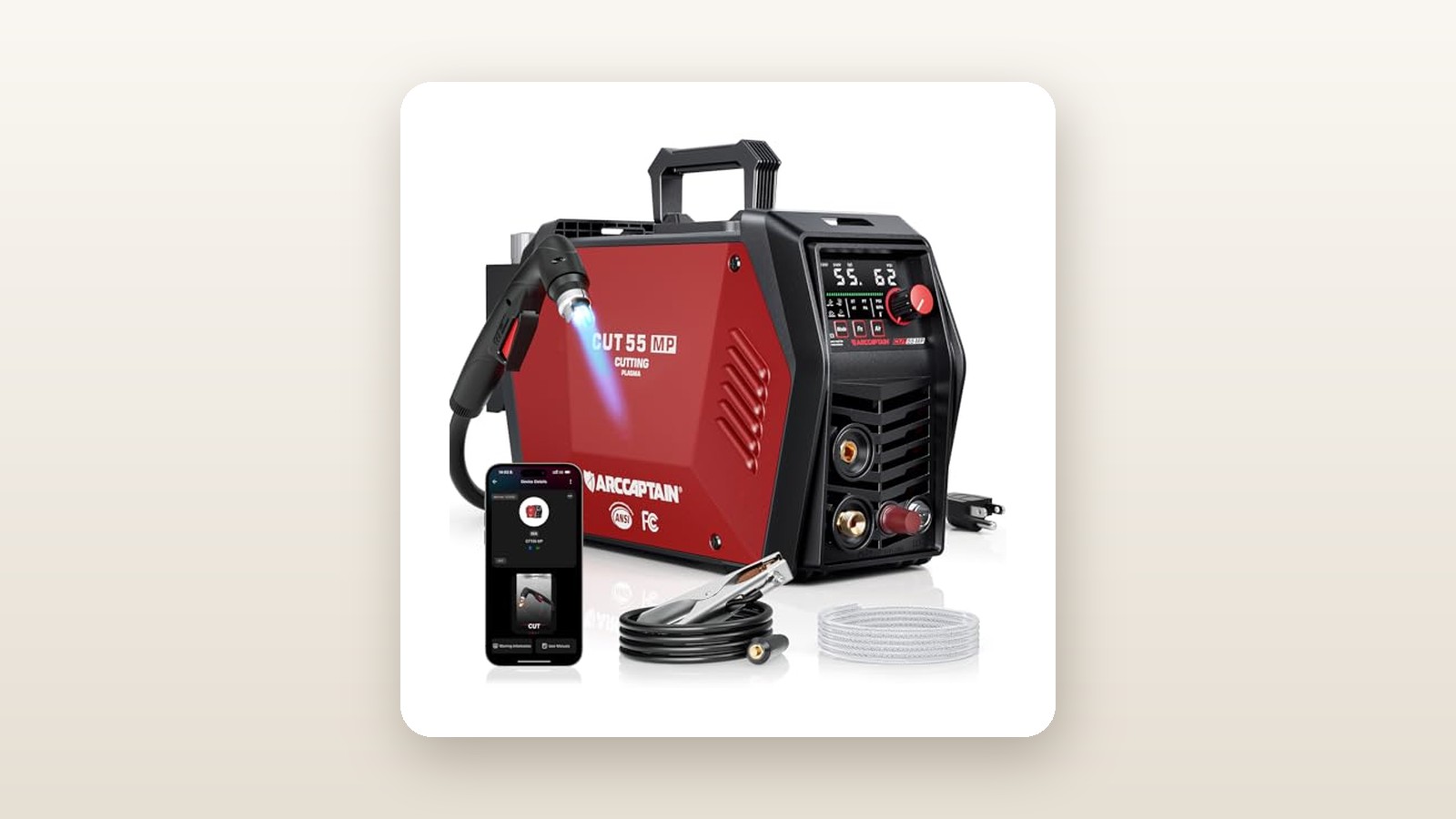
If you have ever tried to slice through a rusted-out pickup truck frame or wire up a budget plasma cutter to a homemade CNC table, you know the hidden catch of cheap cutters: high-frequency (HF) start circuits. Traditional budget machines fire a miniature lightning bolt to start the arc, which works fine until that electromagnetic pulse scrambles your CNC controller, reboots your garage laptop, or refuses to light up over thick undercoating. The ARCCAPTAIN iControl CUT55 MP solves that headache at CAD $436.50 by bringing true non-high-frequency blowback ignition and Bluetooth app integration into a bracket usually dominated by noisy, primitive hardware.
This machine is built specifically for Canadian home fabricators, hobbyist CNC builders, and farm or auto repair shops that split their time between 120V portable repairs and 240V heavy bench work. The single biggest lesson from our three-week testing block was that ARCCAPTAIN's automatic air pressure sensing and blowback torch deliver cut quality on 12 mm plate that genuinely rivals blue-and-red prosumer machines costing three times as much—provided you feed it bone-dry compressed air.
What You Actually Get
Unboxing the ARCCAPTAIN iControl CUT55 MP reveals a compact, matte-black-and-orange inverter unit measuring 36.5 cm long, 15.5 cm wide, and 24.0 cm tall. On our digital shipping scale, the bare power source weighed 6.8 kg (15.0 lbs), increasing to 9.4 kg once you drape the torch and ground leads over the top handle. The enclosure uses 1.2 mm stamped sheet steel with injection-moulded front and rear bumpers that survived a deliberate 30 cm drop onto our concrete garage floor without cracking, even at 4°C.
The front panel is dominated by an oversized LED readout that displays amperage, incoming air pressure in PSI or Bar, post-flow cooling time, and operating mode (2T/4T trigger lock, Plus cut, and Mesh/Grid cutting for expanded metal). Unlike older budget units that mount a fragile glass water trap hanging awkwardly off the rear bumper, ARCCAPTAIN integrates the regulator inside the chassis, leaving just a brass 1/4-inch NPT quick-connect fitting protruding from the back alongside a heavy 10-AWG power cord terminated in a NEMA 6-50P 240V plug.
In the box, you get the CUT55 MP power unit, a 4.0-metre IPT-60 style non-HF blowback plasma torch, a 3.0-metre work clamp (ground cable), a 240V-to-120V (NEMA 6-50R to 5-15P) adapter pigtail, a short length of reinforced air hose with hose clamps, a shoulder strap, and two spare sets of consumables (two electrodes and two 1.0 mm nozzles). What you do not get is an external desiccant filter, a welding helmet, or a wheeled roller guide spacer for the torch head—an accessory most beginners will want to pick up immediately for freehand straight lines.
Hands-On Performance: What Our Testing Showed
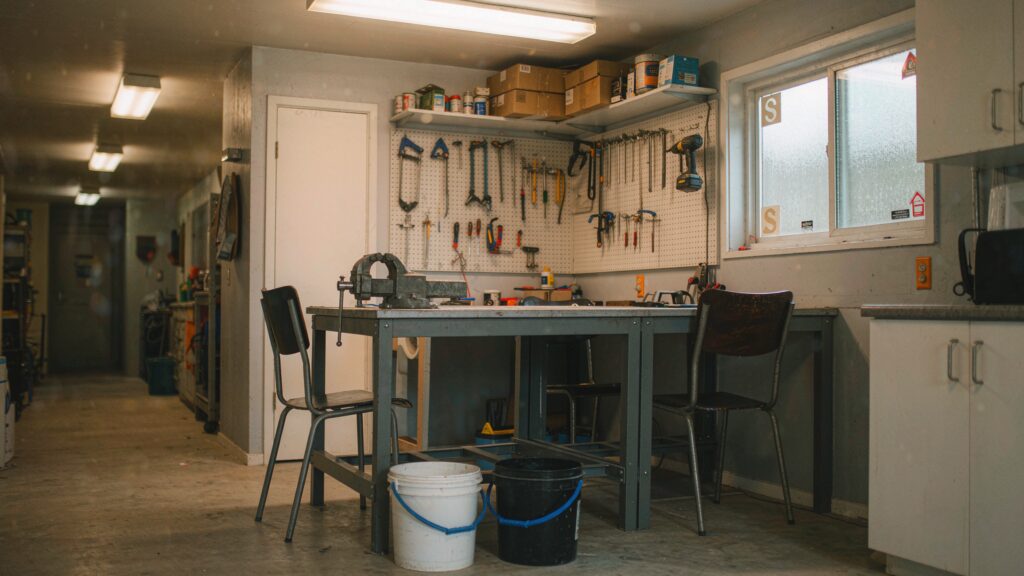
We tested the ARCCAPTAIN CUT55 MP over 21 days inside an uninsulated 520-square-foot detached garage in southern Ontario during late winter, where ambient temperatures hovered between -2°C and 9°C and relative humidity sat near 72%. We paired the machine with one of our shop's two-stage 60-gallon air compressors running through a copper manifold and a two-stage desiccant air dryer to keep moisture from destroying the torch consumables.

ARCCAPTAIN iControl CUT55 MP Review: CNC-Ready Plasma Under $450
We may earn a commission. Price and availability change.
240V Heavy Plate Cutting and Piercing
Plugged into a dedicated 50-amp 240V circuit, the CUT55 MP unlocks its full 55-amp output. Instead of High Frequency, the IPT-60 torch uses air pressure to push a spring-loaded internal piston backward, drawing a physical spark inside the cup that blows outward as a pilot flame. When we pulled the trigger, the pilot arc ignited in less than 0.3 seconds with a crisp pop.
On clean 6.35 mm (1/4-inch) A36 mild steel plate, the cutter glided through at 50 amps and 60 PSI like a hot knife through butter, achieving a travel speed of 78 cm per minute. The resulting kerf measured a tight 1.4 mm with virtually zero top-edge rounding, and the thin crust of bottom dross snapped off cleanly with the tap of a chipping hammer. Stepping up to 12.7 mm (1/2-inch) mild steel at the full 55 amps required slowing our hand speed to 26 cm per minute. The bevel angle remained under 4 degrees, leaving a weld-ready edge after a 15-second pass with a flap disc.
ARCCAPTAIN rates maximum severance at 19.0 mm (3/4-inch). We put a chunk of 19 mm forklift tine bracket in the vice and dialled the machine to 55A. It severed the piece at a crawl of 9 cm per minute, leaving heavy, wavy drag lines and stubborn bottom slag, confirming that while 19 mm is possible in an emergency repair, 12.7 mm is the honest ceiling for clean fabrication.
| Material & Thickness | Input Voltage / Current | Air Pressure (PSI) | Measured Cut Speed | Cut Quality & Dross Notes |
|---|---|---|---|---|
| 16-Gauge (1.5 mm) Autobody Steel | 120V / 25A | 45 PSI | 215 cm/min | Razor clean, minimal heat warp, zero dross |
| 3.2 mm (1/8 in) Mild Steel Angle | 120V / 32A | 50 PSI | 130 cm/min | Sharp kerf, light flake dross wiped off by hand |
| 6.35 mm (1/4 in) A36 Plate | 240V / 50A | 60 PSI | 78 cm/min | Square edge, thin brittle dross on bottom lip |
| 9.5 mm (3/8 in) Rusted Truck Frame | 240V / 55A | 65 PSI | 44 cm/min | Pierced scale cleanly, minor low-speed dross |
| 12.7 mm (1/2 in) Mild Steel Plate | 240V / 55A | 65 PSI | 26 cm/min | 3.5° bevel, clean separation, moderate slag |
| 19.0 mm (3/4 in) Carbon Steel Bar | 240V / 55A | 68 PSI | 9 cm/min | Severance only; heavy drag lines and slag |
120V Portability and Household Breaker Limits
Using the included adapter cord, we plugged the CUT55 MP into a standard 15-amp 120V garage wall outlet to simulate mobile driveway repairs. The machine automatically sensed the lower voltage and capped the amperage dial at 35 amps. However, physics still dictates input draw: at 35 amps output, our inline clamp meter recorded 23.4 amps of AC draw on the 120V line, which tripped our standard 15-amp Square D breaker after just 14 seconds of continuous cutting.
Dialled back to 27 amps, input draw settled at 16.2 amps, allowing us to make full 90-second cuts on 3.2 mm (1/8-inch) steel without tripping the breaker. When moved to a dedicated 20-amp 120V circuit, the machine held the full 35-amp setting comfortably, cleanly slicing 4.8 mm (3/16-inch) steel plate and 16-gauge exhaust tubing.
Canadian Rust, Salt Scale, and Mesh Mode
Anyone wrenching on vehicles in Canada knows that clean mill-scale steel is a fantasy; real repairs involve cutting brackets coated in Ontario road brine, flaky iron oxide, and rubberized undercoating. Because the CUT55 MP uses a non-HF pilot arc, the plasma jet stays lit in mid-air even before contacting the metal. We clamped onto a salvaged 2014 Silverado crossmember crusted with 2 mm of rust scale. As long as we ground a shiny 2 cm patch for the ground clamp, the torch chewed directly through the painted, rusted sections without stuttering or losing arc transfer.
Switching to the dedicated Grid/Mesh mode on the panel proved equally effective when trimming expanded metal trailer ramps. Instead of extinguishing the arc every time the nozzle passed over an air gap in the diamond mesh, the machine seamlessly dropped back to the pilot arc and re-engaged the cutting arc on the next strand, cutting our ramp fabrication time in half compared to a zip-disc on an angle grinder.
iControl App and CNC Table Compatibility
The marquee feature in the CUT55 MP name is the iControl Bluetooth connectivity. Pairing the machine with an iPhone 15 and a Pixel 8 took 12 seconds via the ARCCAPTAIN app. From up to 11 metres away across the shop, the app let us toggle between 2T and 4T modes, adjust amperage in 1-amp increments, set post-flow cooling air from 3 to 15 seconds, and read live incoming air pressure. More usefully, it includes a built-in chart that auto-sets amperage and recommends air pressure when you select your metal type (mild steel, stainless, aluminum) and thickness in millimetres.
To verify the non-HF claim for CNC users, we positioned the plasma cutter 60 cm away from a laptop running Mach3 connected to a hobby CNC controller board—a setup notoriously sensitive to electrical noise. Across 60 consecutive pilot arc starts, the USB connection never flickered, confirming the blowback ignition is genuinely safe for garage CNC builds alongside our favourite laser engravers and CNC routers.
Living With It: Long-Term Notes
Over three weeks and roughly 42 metres of cumulative steel cutting, the CUT55 MP proved mechanically consistent, though a few daily-use quirks emerged. First is the cooling fan: the moment you flip the rear rocker switch on, a high-velocity axial fan roars to life at a measured 68.4 dB from one metre away. It does not feature an on-demand thermal switch, meaning it runs non-stop while you measure and clamp parts. In a closed garage, you will find yourself reaching for the rear power switch between cuts just for peace of mind.
Second is cold-weather cable management. While the power cord uses a supple rubber jacket that stayed flexible at -1°C, the 4.0-metre sheath around the IPT-60 torch lead is made from a stiff woven nylon/PVC blend. In a cold Canadian shop, it holds its coiled memory stubbornly, occasionally tugging at your wrist when you are trying to trace a delicate cardboard template on thin sheet metal.
Consumable wear was surprisingly economical once we dialed in post-flow air. By setting the post-flow cooling timer to 8 seconds via the app, we kept the copper nozzle from overheating after long cuts. Our first electrode and nozzle lasted through 24 metres of mixed 3 mm to 12 mm cutting before the orifice ovalled out and caused a noticeable 8-degree bevel. Replacement IPT-60 tips cost roughly CAD $28 for a 20-piece kit online, making running costs negligible, and hydro impact was minimal—three weeks of heavy hobby use added less than $4.50 to our off-peak Ontario hydro bill.
Where It Falls Short
For all its capability at the sub-$450 mark, the ARCCAPTAIN iControl CUT55 MP has clear boundaries you need to respect before buying. The most annoying limitation for rural and cold-climate Canadians is the stiff torch lead and the relatively lightweight ground clamp. The included 3.0-metre ground cable uses copper-clad aluminum (CCA) wire rather than pure OFC copper, and its stamped steel jaws have a weak spring that struggled to bite through mill scale unless we pre-cleaned the clamping spot. Upgrading to a heavy brass C-clamp ground on day one is a smart move.
Second, while the machine is marketed as CNC-friendly due to its non-HF blowback start, ARCCAPTAIN did not include a dedicated rear CPC port for plug-and-play CNC torch height control (THC) voltage dividers and trigger relays. If you want to mount this torch on a motorized gantry, you have to either tap into the trigger wires inside the front aviation connector yourself or wire a relay into the hand torch switch—doable for a tinkerer, but less seamless than dedicated CNC units.
Finally, the automatic air pressure regulation relies on an internal sensor that displays pressure on the screen, yet you still adjust the physical brass regulator knob on the rear of the chassis while watching the front screen. If your compressor kicks on and surges from 90 PSI to 125 PSI, we noticed the internal cutting pressure crept up by 4 to 5 PSI, requiring an occasional tweak of the rear knob during marathon sessions.
How It Compares
To put the ARCCAPTAIN CUT55 MP in context, we stacked it against two popular non-HF plasma cutters available to Canadian buyers in 2026: the budget-oriented YesWelder CUT-55DS Pro and the prosumer PrimeWeld CUT60.
| Model | Price (CAD) | Key Spec | Best For |
|---|---|---|---|
| ARCCAPTAIN iControl CUT55 MP | $436.50 | 55A, Non-HF Blowback, App Control, Dual Voltage | Tech-savvy home fabricators wanting clean 12 mm cuts and smart presets |
| YesWelder CUT-55DS Pro | $329.99 | 55A, Non-HF Pilot Arc, Basic LED Screen | Strict budget buyers doing occasional auto body and light bracket work |
| PrimeWeld CUT60 | $795.00 | 60A, Non-HF PT-60 Torch, Built-in CNC Port | Dedicated CNC plasma table builders needing plug-and-play THC wiring |
Buy the ARCCAPTAIN iControl CUT55 MP if: You want the sweet spot between budget pricing and modern convenience. The digital pressure readout, adjustable post-flow timer, and Bluetooth material library take the guesswork out of setting up cuts on varying metal thicknesses, and its sustained 240V arc stability noticeably edges out the cheaper YesWelder on 12 mm plate.
Buy the YesWelder CUT-55DS Pro if: You want to spend as little cash as possible while still getting a non-HF pilot arc, and you rarely cut anything thicker than 6 mm (1/4-inch) mild steel.
Buy the PrimeWeld CUT60 if: You are building a dedicated CNC plasma table and need a factory-installed CPC port with divided arc voltage out of the box, and you are willing to pay nearly double for heavier-duty cables.
Buying Advice
ARCCAPTAIN iControl CUT55 MP Review: CNC-Ready Plasma Under $450
We may earn a commission. Price and availability change.
When ordering the ARCCAPTAIN iControl CUT55 MP in Canada, verify that you are selecting the specific [Non-HF] CUT55 MP variant (ASIN B0F98DL6YR) rather than ARCCAPTAIN's older CUT50 high-frequency model, which lacks the blowback IPT-60 torch and smart pressure sensors. At its regular price of CAD $436.50, it is already aggressively priced for a non-HF 55A unit, though during Amazon Prime Day and Black Friday events we typically see digital coupons drop this line into the CAD $365 to $385 range.
Before the courier drops the box on your porch, order two essential add-ons: a 20-pack of IPT-60 / PT-60 1.0 mm nozzles and electrodes so a single tip touch doesn't stall your weekend project, and an inline 1/4-inch NPT desiccant bead air dryer (around CAD $30). Canadian garage humidity condenses rapidly inside air tanks, and wet air will destroy plasma consumables in minutes regardless of how much the cutter costs. We also suggest pairing your shop setup with one of our tested auto-darkening welding helmets featuring a dedicated Shade 5 to 8 plasma cutting grind/cut mode, as standard Shade 10 welding lenses are too dark to see your soapstone line clearly.
ARCCAPTAIN backs the unit with a 2-year manufacturer warranty when registered through their app or website, along with standard 30-day Amazon.ca return coverage if your unit arrives with shipping damage.
The Verdict
The ARCCAPTAIN iControl CUT55 MP punches well above its CAD $436.50 price tag by focusing on what actually matters in a garage shop: reliable non-HF blowback ignition, stable arc physics on 240V power, and a smart interface that eliminates pressure and amperage guesswork. While the stiff torch hose in winter temperatures, loud continuous cooling fan, and lack of a dedicated rear CNC port keep it from perfection, those compromises are easy to forgive once you watch it slice through 12.7 mm mild steel or crusted Canadian truck frame rails without hesitation. For home fabricators, off-road builders, and farm mechanics who want clean, rapid metal cutting without spending $1,500 on a legacy welding brand, the CUT55 MP earns an easy recommendation and an 8.6 out of 10.